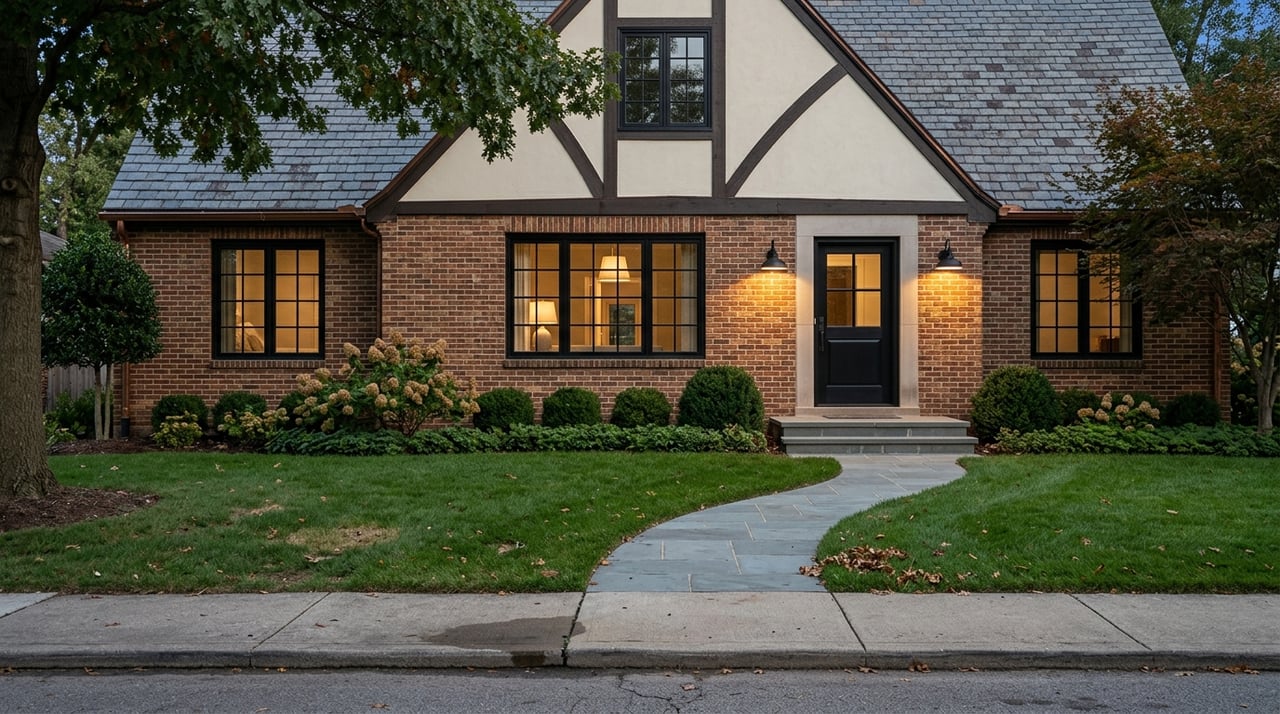
Trying to choose between Maplewood and South Orange? You are not alone. These two Essex County towns attract many of the same buyers because both offer character homes, rail access, and lively commercial districts, yet they feel different once you start looking block by block. If you are weighing commute, housing style, downtown energy, and price, this guide will help you compare the two more clearly. Let’s dive in.
Start With What Feels Right
Maplewood and South Orange share a lot on paper. Both are strong options for buyers who want access to Newark and New York City, older housing stock, and a town center that supports daily life.
The real decision usually comes down to how you want your day-to-day life to feel. One town may suit you better based on the kind of home you want, how close you want to be to a station, and whether you prefer a more centralized village core or a town with activity spread across multiple commercial areas.
Maplewood Housing Character
Maplewood’s housing stock is closely tied to the suburban building boom of the 1920s and 1930s. Township historic-preservation materials note that most homes and many municipal buildings date to the first four decades of the 20th century.
That early development pattern gives Maplewood a cohesive look. Local building rules also encouraged variety by preventing neighboring houses from being identical, so while the streetscape feels consistent, it does not feel repetitive.
You will often see architectural styles such as Colonial Revival, Tudor Revival, Spanish, bungalow, and Four Square homes. If you are drawn to neighborhoods that feel unified and distinctly early-20th-century, Maplewood may stand out quickly.
South Orange Housing Character
South Orange also offers older homes, but the visual identity can feel even more historic. The village describes itself as a residential community with authentic Tudor, Colonial, and Victorian homes, gaslit streets, and a busy village center.
Its preservation materials also point to designated historic areas, including the Montrose Park historic district. In practical terms, South Orange often feels a bit more visibly historic and somewhat more varied in its older core neighborhoods.
If you love the idea of a home with strong period character and a setting that leans into historic identity, South Orange may be the better first stop. That said, both towns reward seeing homes in person rather than relying on broad assumptions.
Compare Downtown Life
Maplewood’s Two Commercial Hubs
Maplewood’s commercial life is split between two active districts: Maplewood Village and Springfield Avenue. The township describes Maplewood Village Alliance as focused on a welcoming and engaging visitor experience.
The Springfield Avenue Partnership describes a 1.5-mile commercial district with events, public art, farmers market programming, and Main Street New Jersey designation. Township event calendars also highlight downtown-centered events such as Summer Streets in the Village and Art Walk & Music Fest.
For many buyers, this means Maplewood can feel like a town with two commercial magnets rather than one central core. That setup may appeal to you if you like having more than one area to build routines around.
South Orange’s Village-Centered Feel
South Orange is organized a little differently. The village identifies two business districts on its main avenues: South Orange Downtown, which manages the Village Center, and Seton Village along Irvington Avenue.
South Orange Downtown describes its work as making the Village Center cleaner, safer, and more pedestrian-friendly while preserving its architectural legacy. Seton Village emphasizes tree-lined streets and turn-of-the-century homes along the Irvington Avenue corridor.
In everyday terms, South Orange tends to feel more centered on one primary village core with a secondary corridor nearby. If you want a town where the main village center plays a big role in daily life, that may be a meaningful difference.
Think About Your Commute
For many buyers, rail access is one of the biggest reasons to compare these towns in the first place. NJ Transit says the Morris & Essex Lines serve Newark Broad Street, Hoboken, and New York, and current timetables include MidTOWN DIRECT service to Penn Station New York.
That means both Maplewood and South Orange are legitimate rail-oriented choices for commuters heading into Newark, Hoboken, or Manhattan. The bigger difference is not whether either town has train access. It is how station access works inside each town.
Maplewood Station Setup
Maplewood has one station located between Dunnell Road and Maplewood Avenue. NJ Transit lists parking, Wi-Fi, and bike racks or lockers there.
If you like the simplicity of a one-station town, Maplewood may feel easy to understand. Your search can focus on how close you want to be to that station and to Maplewood Village.
South Orange Station Options
South Orange has the main South Orange Station, which also offers parking, accessibility, Wi-Fi, and bike facilities. It also has Mountain Station on the Morris & Essex and Gladstone Branch corridor.
That gives some South Orange residents an additional boarding option depending on where they live. If commuter flexibility matters to you, South Orange may offer more station-choice advantages in certain parts of town.
Look Past the Townwide Price Number
Price is important, but this is where many buyers can get tripped up. The data in Maplewood and South Orange do not point to one simple answer.
Realtor.com’s March 2026 market pages show Maplewood with 61 for-sale listings, a median asking price of $812,000, 20 median days on market, and a 107% sale-to-list ratio. South Orange shows 35 for-sale listings, a median asking price of $987,000, 27 median days on market, and a 106% sale-to-list ratio.
On that set of metrics, Maplewood has more current inventory and a slightly faster pace, while South Orange appears tighter and more expensive on asking price. Zillow’s home-value data also places South Orange above Maplewood, with average home values at $1,083,029 in South Orange and $944,877 in Maplewood.
Zillow’s rental pages show a similar pattern. Typical rent is listed at $3,272 in South Orange versus $2,983 in Maplewood, with both up year over year.
But sold-price snapshots can tell a different story. Redfin’s March 2026 figures report a median sale price of $999,000 in Maplewood versus $735,000 in South Orange.
That does not mean one source is right and the others are wrong. It means these numbers measure different things, and townwide median data can only tell you so much.
Why Block-by-Block Matters
In both towns, the town name alone does not tell the whole story. Property type, renovation level, location within town, and distance to a station can shape value as much as the municipal boundary.
A renovated home near a station may compete very differently from an older home that needs work farther out. The same is true for rentals, condos, and single-family homes.
This is why a block-by-block search matters more than a broad label like “Maplewood is cheaper” or “South Orange is more expensive.” There is overlap between the two towns, and the best fit for you may come down to a very specific pocket rather than a headline statistic.
Which Town May Fit You Better
There is no universal winner here. The better town is the one that lines up with your priorities.
Maplewood may be a better first stop if you want:
- A one-station setup centered around Maplewood Village
- A cohesive early-20th-century suburban feel
- Two active commercial areas instead of one main core
- A slightly lower asking-price baseline based on current listing data
South Orange may be a better first stop if you want:
- A more overtly historic feel with Tudor, Colonial, and Victorian homes
- A clearly defined Village Center
- More station-choice flexibility in certain locations
- Higher typical home-value and rent benchmarks based on current estimates
A Smart Way to Tour Both Towns
If you are serious about choosing between Maplewood and South Orange, try to compare them in the same way. Tour homes in similar price ranges, visit each downtown on both a weekday and a weekend, and look at the route from likely home areas to the train.
It also helps to separate your must-haves from your nice-to-haves. For example, if station access is your top priority, that may point you one way. If architectural style and a strong village-center feel matter more, that may point you another way.
The goal is not to choose the “better” town in the abstract. The goal is to choose the town that fits your lifestyle, budget, and housing priorities with the least compromise.
When you are ready to compare Maplewood and South Orange with real listings, real timing, and a practical strategy, Liz Morris can help you narrow the search and move with confidence.
FAQs
How do Maplewood and South Orange differ in housing style?
- Maplewood is known for a cohesive early-20th-century housing stock with styles like Colonial Revival, Tudor Revival, Spanish, bungalow, and Four Square, while South Orange is known for Tudor, Colonial, and Victorian homes and a more visibly historic feel in some core neighborhoods.
How do Maplewood and South Orange compare for commuting to New York City?
- Both towns are served by NJ Transit’s Morris & Essex Lines with service to Newark Broad Street, Hoboken, and New York, but Maplewood functions more like a one-station town while South Orange offers additional flexibility with South Orange Station and Mountain Station.
Is Maplewood or South Orange more expensive?
- Current asking-price, home-value, and rent data generally place South Orange higher, but sold-price data can vary by source, so your actual options will depend on property type, condition, and location within each town.
Does Maplewood or South Orange have a better downtown?
- That depends on your preference: Maplewood has two active commercial districts, while South Orange tends to feel more centered on one main Village Center plus a secondary corridor.
What matters most when choosing between Maplewood and South Orange?
- The biggest factors are usually housing style, station access, downtown feel, and how far your budget goes on a specific block, because broad townwide averages do not always reflect the homes you will actually consider.