In November 2017, a Ridgewood Avenue homeowner put a sign on her corner property after a Historic Preservation Commission member called her mid-renovation home "the most unsightly home in Glen Ridge" during a public meeting, as reported by Montclair Local. It's the kind of anecdote that makes people think the borough's historic district rules are mostly about taste, about one commission member's opinion of your porch versus another's.
This anecdote also raises a practical question for homeowners: when should exterior work be submitted to the Historic Preservation Commission?
The Rule That Touches Almost Every House in Town
Glen Ridge's Historic District covers more than 90% of the borough and runs nearly its full length, according to the borough's own Historic Preservation Commission page. The HPC was established by ordinance in 1987 to protect the turn-of-the-19th-century residential architecture that gives the town its character, and the rule that follows from that coverage is simple: before exterior work begins on almost any Glen Ridge property, you need a Certificate of Appropriateness, not just a building permit.
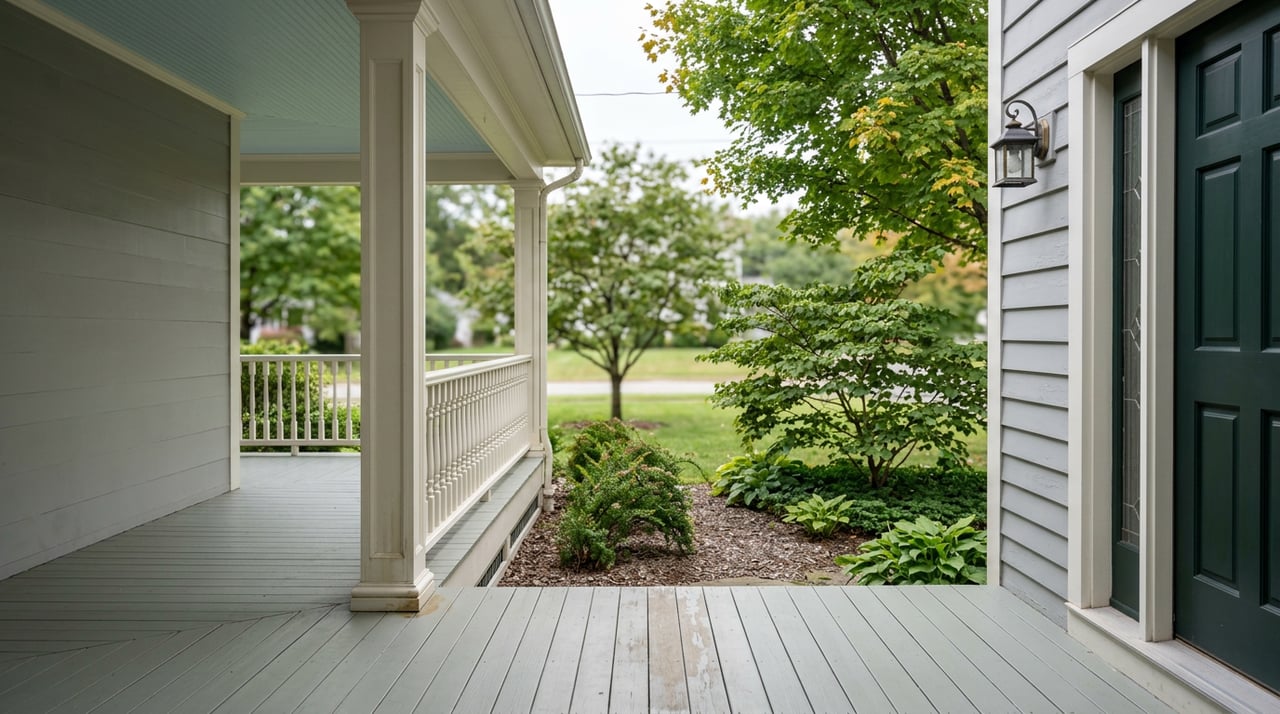
That covers more than most people expect. Roofing material changes, siding, porch and railing alterations, even lattice work under a porch, all require HPC review if visible from the street. The borough's guidelines define "seen from the street" broadly: the front sidewalk, the side sidewalk on a corner lot, even a view down a driveway at an angle. Trees, shrubs, or fencing that currently block the view don't exempt you, because the guidelines note they could be removed later. On a corner lot, even backyard work can count as street-visible.
A short list of exceptions exists in the ordinance, for things like replacing a structure with an exact replica or working solely on a non-corner rear elevation that stays out of sight. But the ordinance is specific on one point: no matter what else is exempt, any change to siding or roofing material has to go before the commission.
Planning Around the HPC Calendar
For sellers and buyers planning exterior work, the HPC's monthly schedule can affect a project timeline. Missing a submission deadline may mean waiting for the next meeting.
| Step | Timing |
|---|---|
| Preliminary application (digital, to the HPC consultant) | At least 20 calendar days before the meeting |
| Consultant technical review | Confirms completeness, not approval |
| Final application (hardcopy, to the Building Department) | At least 9 calendar days before the meeting |
| HPC meeting | Monthly, 7:30 PM |
| Commission decision deadline | Within 45 days of receiving the referral under the borough ordinance; if the commission doesn't act, the work is deemed approved unless the applicant agreed to extend the clock |
| Certificate of Appropriateness validity | Two years from issuance, with extensions possible before it lapses |
The 45-day decision period begins when an application is referred, so it doesn't shorten the wait created by missing a submission deadline.
If you're planning a fall pre-listing refresh, replacing tired vinyl windows or updating a porch railing before photos, that one-meeting-a-month cadence is the actual constraint on your timeline, not contractor availability.
What a Real Application Looks Like
The borough's own meeting minutes show how this plays out on real properties. In one July 2024 session, homeowners Don and Julie Zichelli, working with architect Susan Link, presented a plan to rebuild a front porch to match a historic photograph, restore cedar shakes hidden under aluminum siding, and add shutters to the front windows only. Commission members raised a question about applying the shutter treatment to both sides of the front door rather than one, and after what the minutes describe as an extensive discussion of historical precedent, the homeowners withdrew the application to return the following month with revised plans.
That's not a rejection; the minutes describe a withdrawal, not a denial. In the same session, a separate application to rebuild a storm-damaged garage, presented by the homeowner with contractor John Fahmy, was approved as submitted after a brief back-and-forth on garage door style. The contrast illustrates why each application's path depends on its own review.
Guidelines for Common Exterior Projects
The guidelines also identify materials the HPC will not approve, giving applicants information to consider while planning. Vinyl windows are a clear line: the HPC's guidelines name particular product lines, including Andersen's 200 and 400 Series in vinyl, Pella's 250 and 350 Series along with Encompass and Thermastar, several Jeld-Wen vinyl lines, and Harvey's Tribute and Classic Vinyl Series, as products that will not be approved. Wood windows with simulated divided lights are the preferred replacement, since they can be painted to match existing trim and manufactured to fit a home's original proportions.
Roofing guidelines distinguish between in-kind replacement and changes that affect existing materials. In-kind replacement, asphalt to asphalt, doesn't need HPC review at all. The commission is on record as generally declining to approve the loss of a slate roof, often steering homeowners toward repair with a roofer experienced in slate rather than a full replacement.
What This Means If You're Listing This Fall
If you're preparing a Glen Ridge home for market and any part of your prep touches the exterior, windows, a porch, siding, a roof, treat the HPC calendar the way you'd treat a home inspection: something to schedule early, not something to squeeze in before photos. Call the Building Department before you call a contractor. A project that could otherwise take two weeks may take two months if it misses a monthly submission deadline, and a listing date built around a completed exterior refresh needs that buffer built in from the start.
It also cuts the other way for buyers. If a property you're considering had exterior work done by a previous owner, and you're not sure whether it went through the HPC, that's worth asking about directly rather than assuming it did. New Jersey's Division of Community Affairs has noted that when a resale inspection turns up unpermitted work, the recommended fix is often a Certificate of Continued Occupancy inspection, so the documentation catches up and a future owner isn't left holding a violation someone else created. In a town where 90% of properties fall under historic review, that question is worth asking on more homes than not.
Separately from any HPC work, every Glen Ridge home sale requires its own step: according to the Borough of Glen Ridge, the seller or owner has to email the borough's Director of Planning and Development directly to obtain the Certificate of Occupancy needed for closing. It's a distinct process from the historic district review, but it's another calendar item worth starting early rather than the week before closing.
A Few Questions Worth Answering Directly
What happens if exterior work was done without a Certificate of Appropriateness? The borough's guidelines are direct on this: performing exterior work without a valid COA, or outside the scope of an approved application, is a violation that can lead to penalties. If you're buying a home where this may have happened, it's a fair question to raise before closing rather than after.
How long is a Certificate of Appropriateness valid? A COA is valid for two years from issuance.
If you're weighing a listing timeline, a purchase in the historic district, or just want to understand what a specific Glen Ridge property will and won't let you change, The Liz + Vikram Team has walked enough of these properties through both processes to tell you what's realistic before you commit to a date. Contact us.
This article is general information, not legal, tax or financial advice. Consult a qualified professional about your situation.